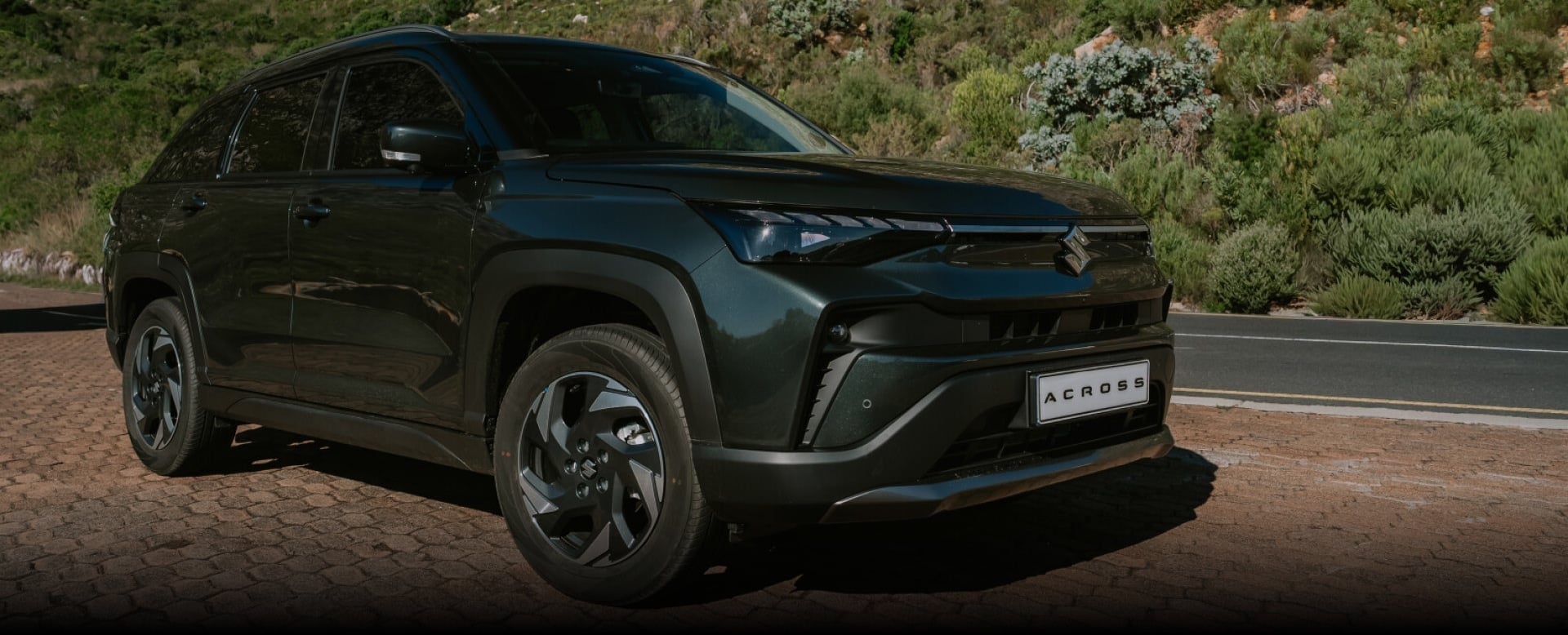
How Mild-Hybrid Technology Works in the Suzuki Across
The Suzuki Across brings something new to our local range: mild-hybrid technology. It's the first Suzuki in South Africa to combine a petrol engine with an electrical assist system designed purely to help you use less fuel — without changing how you actually drive. Here's a straightforward look at how it works and what it means for ownership.
Key Takeaways
- The Across is Suzuki's first mild hybrid electric vehicle (MHEV) in South Africa, pairing a 1.5-litre petrol engine with Suzuki's SHVS mild-hybrid system.
- An Integrated Starter Generator (ISG) assists acceleration, powers smooth stop-start, and recovers energy when slowing down.
- No external charging is required — the hybrid battery charges itself as you drive.
- Mild-hybrid tech can improve fuel efficiency by roughly 5% to 15%, depending on driving conditions.
- Unlike a full hybrid, the Across can't run on battery power alone — the electrics support the engine, not replace it.
- Servicing stays familiar: a 15,000 km or 12-month interval, much like Suzuki's conventional petrol models.
As hybrid vehicles become a bigger part of the South African market, the Across is Suzuki's most technologically advanced local model yet — and one of the most affordable mild-hybrid SUVs currently available in the country. From behind the wheel, there's very little to adjust to: you fill up with petrol, drive it like any other Suzuki, and let the hybrid system manage itself in the background.
What Is A Mild Hybrid Electric Vehicle?
A mild hybrid electric vehicle (MHEV) uses a petrol engine that's supported — not replaced — by an electrical system. In the Across, the petrol engine does the actual work of moving the car, while the hybrid components step in to lighten the load at specific moments, like pulling away or accelerating.
| Vehicle Type | How It Works | Needs External Charging? |
|---|---|---|
| Mild hybrid (MHEV) | Petrol engine drives the car, with electrical assistance for efficiency | No |
| Full hybrid | Can run on the petrol engine, electric power, or both | No |
| Battery electric (BEV) | Runs entirely on electricity from a larger battery | Yes |
Because the Across is a mild hybrid, it can't drive on battery power alone — the electrical side exists purely to help the petrol engine use less fuel.
How The System Works
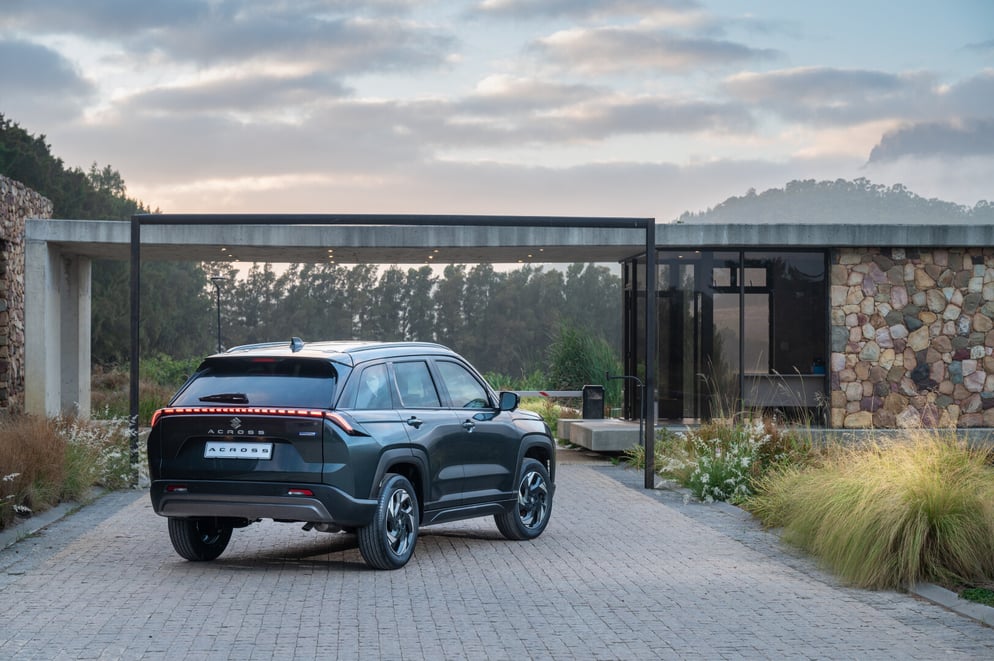
The Across uses Suzuki's Smart Hybrid Vehicle by Suzuki (SHVS) technology, built around an Integrated Starter Generator (ISG) and a hybrid battery. When you pull away or accelerate, the ISG gives the petrol engine a helping hand. As you slow down, that same system recovers energy and stores it in the battery for later use.
The ISG also plays a role in the automatic stop-start system — helping the engine restart smoothly the moment you're ready to move again. According to Suzuki's own team, it's one of the smoothest stop-start experiences they've tested in a vehicle, built to work quietly enough that most drivers won't even notice the technology is there. There's nothing to switch on or manage — it all happens automatically.
Built For Everyday Efficiency
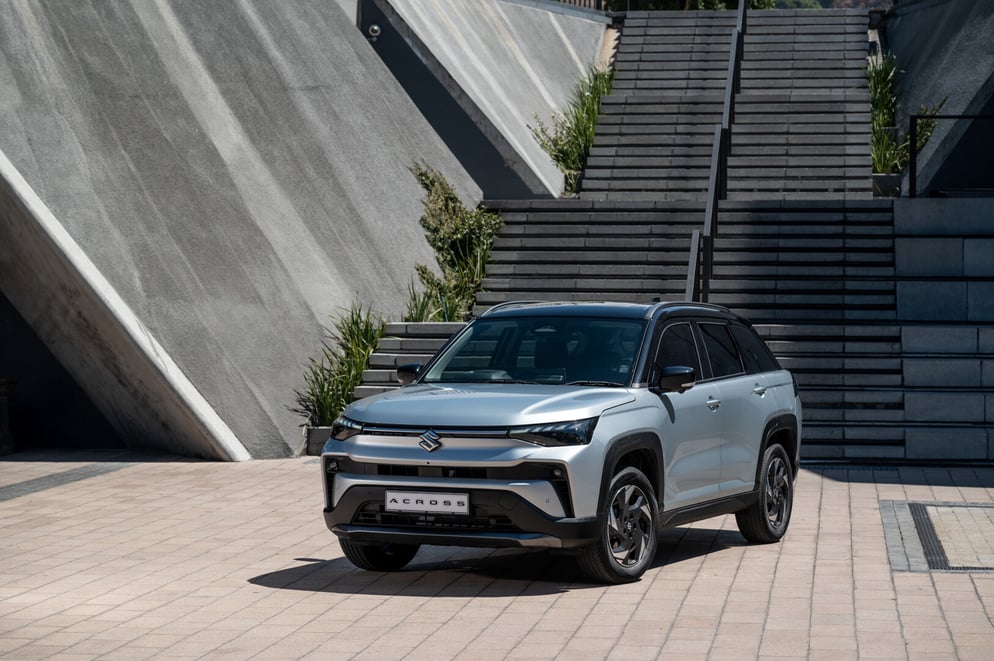
The mild-hybrid system isn't about turning the Across into a performance machine — it's there to reduce strain on the engine at exactly the points where it makes the biggest difference to fuel use. The six-speed automatic transmission works alongside it, helping deliver a smooth, efficient drive whether you're in traffic or cruising on the open road.
Around town, the system recovers energy as you slow down, cuts idling through stop-start, and assists when you pull away again. On longer trips, the petrol engine takes over more of the work at a steady cruising speed, with the hybrid system stepping back in whenever you accelerate. That makes it useful across the kind of mixed driving most South Africans actually do — not just stop-start traffic.
Depending on driving style and conditions, mild-hybrid technology can offer fuel savings of roughly 5% to 15% compared with a conventional petrol engine. Real-world results will vary based on traffic, terrain, speed, and how loaded the vehicle is.
No Plugging In Required
One of the biggest advantages of a mild hybrid is simplicity — the Across has no external charging requirement at all. The hybrid battery recharges itself using energy recovered while you're slowing down, so there's no charging point to install at home and no charging stop to plan into a road trip.
That means you keep the same range and refuelling routine you'd expect from a petrol SUV, just with electrical assistance helping that fuel go further — a middle ground between a conventional petrol vehicle and the fully electrified options entering the market.
Servicing Stays Familiar
Adding mild-hybrid technology doesn't change how the Across gets serviced. It follows the same 15,000 km or 12-month interval as Suzuki's conventional petrol range, and for at least the first four to five years, servicing costs and requirements stay largely in line with what owners of a regular Suzuki are already used to.
The hybrid battery itself is designed to last the vehicle's full lifecycle rather than needing routine replacement — and if a fault ever does occur, replacement batteries are available and covered under warranty.
A Vehicle Built To Do Different Jobs
The Across is designed to flex between roles — a family's main car, a first step into SUV ownership, or a downsize option for someone moving on from a bigger SUV without giving up the elevated driving position and everyday versatility. A school run and daily commute during the week can easily turn into a fully-loaded weekend road trip, and the mild-hybrid system works across all of it without asking you to drive any differently.
Safety hasn't taken a back seat either. On the GLX model, Dual Sensor Brake Support II (DSBS II) uses camera and radar technology to help detect vehicles, pedestrians, cyclists, and motorcycles — supporting the driver rather than taking over, and stepping in only when it identifies a potential risk.
Want to feel the mild-hybrid difference for yourself?
Book A Test DriveFAQs:
Based on information originally published by Suzuki Auto South Africa: How Mild-Hybrid Technology Works in the Suzuki Across.